Last Updated on December 14, 2025 by Wahid
Standard fabrics simply cannot handle the great outdoors. If you put a regular cotton cushion on your patio, the sun will fade it, and the rain will turn it into a breeding ground for mold within weeks.
To combat the elements, you need specialized materials.
Outdoor fabrics are chemically and structurally engineered to resist UV rays, moisture, and microbial growth.
In this guide, we will explore the best fabrics for your outdoor projects—from the rugged durability of canvas to the high-tech performance of solution-dyed acrylics—and help you choose the right one for your climate.
What Makes a Fabric “Outdoor Rated”?
Not all strong fabrics are suitable for outdoor use. To be truly “outdoor rated,” a fabric must possess specific protective qualities:
- UV Resistance (Fade Protection): The sun is the biggest enemy of fabric. Outdoor fabrics are treated or dyed in a way that prevents UV rays from breaking down the fibers and fading the color.
- Water Protection: There is a big difference between water-repellent and waterproof (we will cover this distinction below).
- Mildew Resistance: In humid conditions, moisture gets trapped in fibers. Outdoor fabrics are often treated with antimicrobial chemicals to prevent mold growth.
- Durability (Rub Count & Weight):
- Rub Count: Higher rub count means better resistance to wear and friction.
- Weight: Heavier fabrics are generally better for upholstery (to withstand sitting tension), while lighter fabrics are better for covers and rain gear.
Top Types of Outdoor Fabrics
Here are the most common materials you will encounter, along with their best uses.
Canvas / Duck Cloth (Cotton-Based)
Canvas is a classic, heavy-duty woven fabric known for its rugged look. However, untreated cotton canvas absorbs water quickly and will mildew if left outdoors.
For outdoor projects, always look for “Marine Grade” canvas. Marine-grade canvas is chemically treated to resist water, UV rays, and mildew effectively.
(Coming Soon: Our detailed Canvas Fabric Guide)
Solution-Dyed Acrylic (e.g., Sunbrella®)
This is widely considered the gold standard for outdoor upholstery.
Unlike printed fabrics where the color is just on top, solution-dyed acrylic has color pigments added to the liquid polymer before the fiber is even made. The color goes all the way through, like a carrot (vs. a radish). This makes it incredibly fade-resistant.
Vinyl (PVC) & Marine Fabric
Vinyl is a synthetic plastic-based fabric. It is the heavy-hitter for extreme waterproofing.
- Pros: It is fully waterproof and easy to wipe clean.
- Cons: Breathability is very low to non-existent. Prolonged sitting on vinyl can be uncomfortable and sticky in hot climates. It is best used for boat covers or awnings rather than seating.

Ripstop Nylon
Lightweight and tough, this synthetic fabric has a grid pattern woven into it to stop tears from spreading. It is commonly used for tents, kites, and lightweight covers.
Comparison: Canvas vs. Synthetic Outdoor Fabrics
| Feature | Treated Canvas | Solution-Dyed Acrylic | Vinyl (PVC) |
| Best Use | Bags, Director Chairs | Patio Cushions, Umbrellas | Boat Covers, Awnings |
| Water Protection | Water Resistant | Water Repellent | Fully Waterproof |
| Breathability | Good | Excellent | Poor (Traps Heat) |
| Fade Resistance | Moderate | Excellent | High |
| Maintenance Level | Medium (Needs retreatment) | Low (Easy clean) | Low (Wipe down) |
Waterproof vs. Water Resistant: Decoding the Labels
It is critical to understand that Water-resistant ≠ Waterproof. Using them interchangeably can ruin your project.
Water Resistant (DWR)
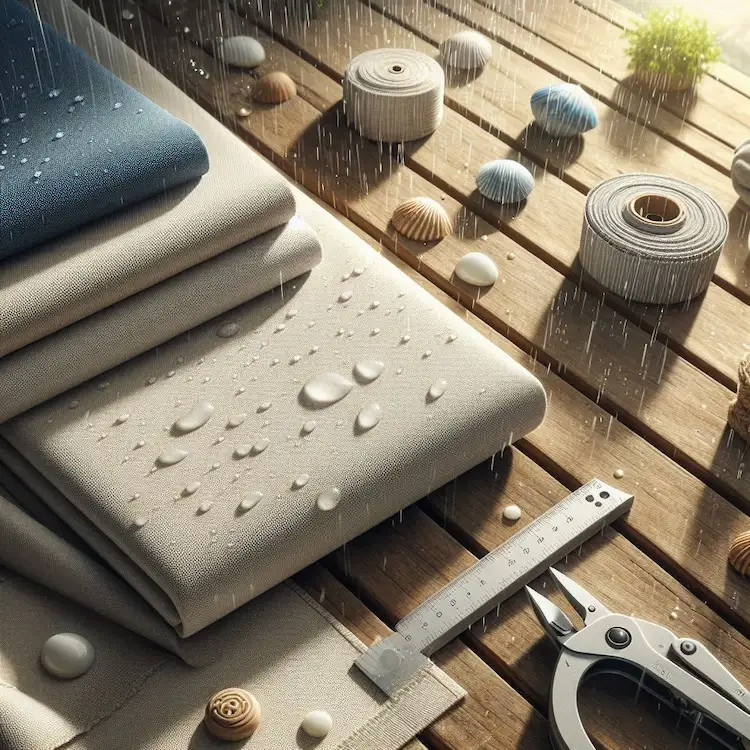
These fabrics are treated with a Durable Water Repellent (DWR) finish. Water beads up and rolls off the surface, but if water sits on it for a long time, it will eventually soak through.
- Best for: Cushions, curtains, and umbrellas.
Waterproof
Waterproof fabrics provide a complete barrier. Water cannot pass through them, even under pressure. Waterproof performance is often measured using hydrostatic head (water pressure in millimeters).
- Best for: Boat covers, tarps, and rain gear.
(Want to add protection to your existing gear? Check our guide on how to make clothes waterproof effectively.)
Common Uses & Project Ideas
Choosing the right fabric depends heavily on your specific project:
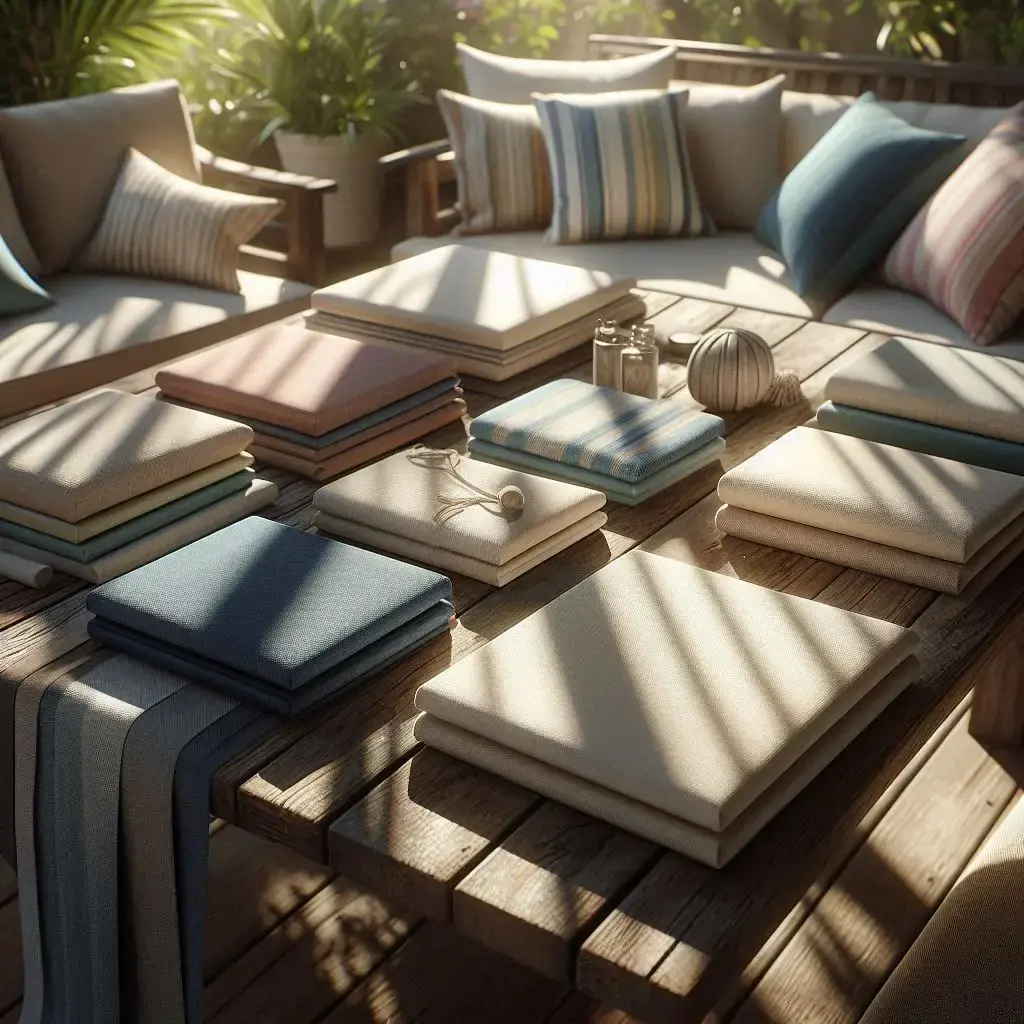
- Patio Cushions: Use Solution-Dyed Acrylic. It breathes well and won’t get sticky in the sun.
- Boat Covers: Use Marine Vinyl or coated polyester. You need absolute waterproof protection here.
- Sunshades: Use Canvas or Acrylic. They provide shade while allowing hot air to escape.
Climate Context: Which to Choose?
Your local weather should dictate your fabric choice:
- Sunny & Dry: Focus on UV resistance (Acrylic) to prevent fading.
- Humid & Rainy: Focus on mildew resistance and synthetic fibers. Humid climates require stronger mildew resistance than dry, sunny regions.
Care & Maintenance (Fighting Mold & Mildew)
Even the best outdoor fabric needs care. Dirt and pollen can settle on the fabric, creating a layer where mold can grow.
- Brush it off: Regularly brush off loose dirt and tree sap.
- Spot Clean: Use mild soap and water for most stains.
- Mildew Removal: If mold appears, a diluted bleach solution is often used on acrylics. However, always follow manufacturer guidelines before using bleach on outdoor fabrics, as it can damage certain coatings.
- Re-treat: Over time, the DWR finish wears off. You may need to apply a fabric guard spray every year or two to keep water beading up.
Conclusion
Investing in the right outdoor fabric saves you money in the long run. While regular cotton might look nice initially, it won’t survive a single season of rain and sun.
For furniture you sit on, choose breathability and comfort (Acrylic). For things you cover up, choose protection (Vinyl).
Frequently Asked Questions (FAQs)
Can I use regular cotton for outdoor cushions?
Generally, no. Unless it is heavily treated, regular cotton will fade rapidly and develop mold when exposed to moisture.
Is Sunbrella worth the money?
In most cases, yes. If you live in a sunny area, the solution-dyed fibers last years longer than cheaper prints without fading.
How long do outdoor fabrics last?
It depends on the exposure. High-quality acrylics can last 5-10 years, while treated canvas might last 3-5 years with proper maintenance.