Last Updated on December 13, 2025 by Wahid
Shirt fabrics define your daily comfort. Poplin is thin and smooth (great for suits), Oxford Cloth is thick and textured (perfect for casual wear), and Broadcloth is tight and shiny (ideal for formal events). According to textile standards, choosing the wrong weave leads to discomfort and poor style.
I learned this the hard way at a summer wedding. I wore a heavy Oxford shirt and overheated within twenty minutes. If I had chosen a breathable Poplin or Broadcloth instead, I would have stayed cool and looked much sharper in the photos.
Stop guessing with your wardrobe investments. Keep reading to discover exactly which fabric fits your specific needs for every season and occasion.
Understanding Shirt Fabric Weaves
To choose the right shirt, you must understand the “weave”—how the threads cross each other. This structure determines if a shirt feels like a heavy blanket or a light sheet. Here is the breakdown of the big three.
What is Poplin? (The Smooth Professional)
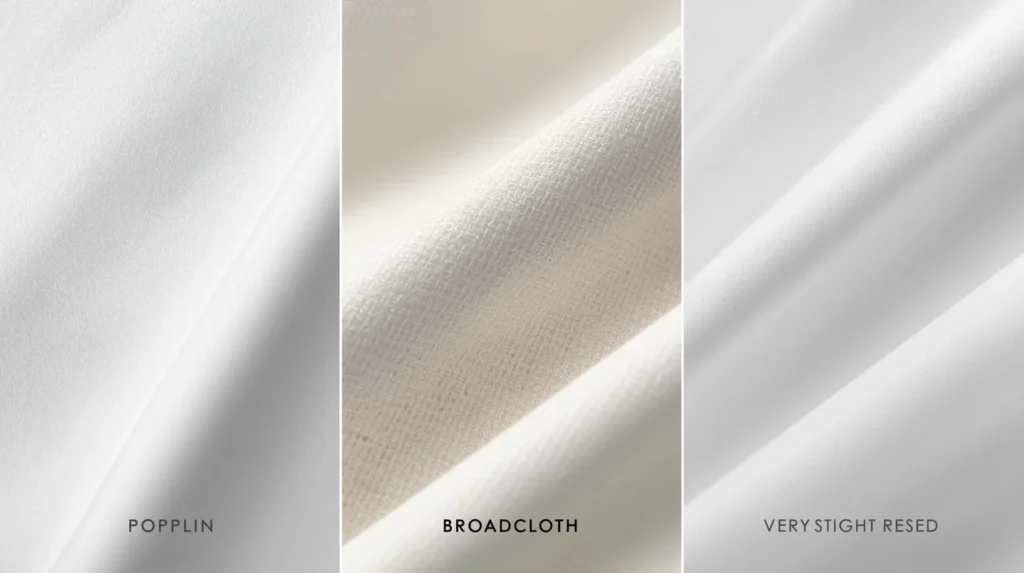
Poplin is the most common dress shirt fabric for a reason. Manufacturers create it using a simple “over-under” weave pattern. This results in a material that is tightly woven yet very thin and smooth to the touch.
In shirt manufacturing, Poplin is considered highly breathable because of its lightweight nature. It is the go-to choice for professional office wear because it looks crisp and fits easily under a suit jacket. However, there is a trade-off: Poplin holds wrinkles stubbornly. If you hate ironing, this fabric might frustrate you.
- Best For: Daily office wear, formal suits, and hot weather.
- Key Attribute: Very smooth but wrinkles easily.
- Related Comparison: Poplin vs. Oxford: Which is Better?
What is Oxford Cloth? (The Durable Classic)
Oxford cloth uses a “basket weave” structure where multiple weft threads cross over an equal number of warp threads. This creates a noticeable texture and a fabric that is significantly thicker and heavier than Poplin.
Because of its weight, Oxford cloth is durable and holds its shape well, resisting wrinkles better than fine dress shirts. It naturally feels more casual. You will usually see this fabric used in “Oxford Cloth Button Down” (OCBD) shirts. Note that standard Oxford cloth is not very dressy; it is meant for jeans or chinos, not tuxedos.
- Best For: Casual Fridays, weekend wear, and cooler weather.
- Key Attribute: Thick texture that gets softer with every wash.
- Related Comparison: Oxford vs. Royal Oxford
What is Broadcloth? (The Formal Standard)
Broadcloth is very similar to Poplin but technically superior in thread count. It uses a tighter variation of the plain weave, often resulting in a fabric with a subtle shine or “luster.”
This is the most formal fabric of the three. Because the threads are packed so tightly, Broadcloth looks incredibly sharp and elegant. However, this density can make white Broadcloth shirts slightly transparent (low opacity). Textile experts often recommend wearing an undershirt with white Broadcloth to avoid visibility issues.
- Best For: Weddings, black-tie events, and important meetings.
- Key Attribute: Elegant shine; low opacity in white shirts.
- Related Comparison: Broadcloth vs. Poplin
Poplin vs. Oxford vs. Broadcloth: The Comparison
If you are in a rush, use this quick comparison chart to pick the right fabric for your specific event.
| Feature | Poplin | Oxford Cloth | Broadcloth |
| Breathability | High (Best for heat) | Low to Medium | Medium–High (depends on weight) |
| Wrinkle Resistance | Low (Wrinkles easily) | High (Holds shape) | Low (benefits from ironing or starch) |
| Texture | Smooth & Flat | Thick & Basket-weave | Smooth with Shine |
| Formal Level | Business / Formal | Casual / Smart-Casual | Very Formal |
| Best Season | Summer / Year-round | Winter / Fall | All Seasons |
| Best Real-World Use | Daily Office, Suits | Weekend, Jeans, BBQ | Weddings, Formal Business Events |
Key Takeaways from the Data:
- For Summer Events: Avoid Oxford cloth. Choose Poplin for maximum airflow to stay cool.
- For Travel: Oxford cloth is your best friend because it resists wrinkles in your suitcase better than fine dress shirts.
- For Formal Wear: Broadcloth is the best standard shirt fabric for formal events when a traditional tuxedo shirt (like Piqué) is not required.
Other Common Shirt Fabrics You Should Know
While Poplin, Oxford, and Broadcloth cover 80% of your needs, sometimes you need more texture or warmth. Here are the best alternatives to expand your wardrobe.
Twill & Herringbone (Texture & Depth)
If you dislike frequent ironing, Twill is your best friend. Unlike the plain “over-under” weave of Poplin, Twill uses a diagonal weave pattern. This makes the fabric softer, thicker, and naturally resistant to wrinkles. It also drapes better on the body than a stiff Broadcloth.
Herringbone is a popular variation of Twill that creates a distinct “V” shape pattern resembling a fish skeleton. It adds subtle visual depth to solid-colored shirts without being too loud for the office.
- Best For: Wrinkle resistance and easier ironing.
- Related Comparison: Herringbone vs. Twill
Denim vs. Chambray (The Casual Kings)
Many people confuse these two, but they are very different. Denim is a heavy Twill weave (like your jeans), making it durable but stiff. It usually has a lighter underside.
Chambray, on the other hand, is a plain weave just like Poplin. It looks like Denim because it uses colored yarn in one direction and white yarn in the other, but it is much lighter and more breathable. Think of Chambray as the “summer version” of a denim shirt.
- Best For: Casual weekends (Chambray for summer, Denim for fall).
- Related Comparison: Chambray vs. Denim
Flannel (Winter Essential)
When the temperature drops, Poplin is too thin to keep you warm. Flannel is typically made from cotton or wool that has been “brushed” on one or both sides. This brushing process raises the fibers to create a fuzzy texture (also called a nap) that traps body heat effectively.
While Poplin feels cool and crisp against the skin, Flannel feels soft and cozy. It is strictly a casual fabric, perfect for pairing with jeans or corduroys.
- Best For: Cold weather and insulation.
- Related Comparison: Poplin vs. Flannel
Fabric Care: Keeping Your Shirts New
Even the most expensive Broadcloth shirt will look bad if treated poorly. Here is how to maintain each fabric type.
Washing & Ironing Tips
Always check the care label first, but general rules apply based on the weave. A pro tip for all fabrics: Always turn your shirts inside out before washing. This simple step significantly reduces surface friction and keeps collars looking new longer.
Oxford cloth is rugged and can handle standard machine washing. It naturally softens over time, so you should skip the fabric softener to maintain its authentic texture.
Poplin and Broadcloth, being thinner and more delicate, require gentle cycles to prevent wear. Because Poplin wrinkles so stubbornly, you will need to iron it while it is slightly damp or use a high-steam setting to get that crisp, professional look.
- Tip: Never overheat Broadcloth, as high heat can damage its natural shine.
- Full Guide: Dress Shirt Care Tips
Handling Shrinkage (Cotton vs. Blends)
All 100% cotton shirts will shrink slightly after the first wash—usually about 1-3%. Oxford cloth tends to shrink the most in length because of its loose basket weave. To minimize this, hang dry your shirts instead of using a dryer.
If you buy a Cotton Poplin shirt, fit is critical. Since Poplin has very little natural stretch, a shrunken shirt will feel restrictive around the shoulders and chest immediately.
- Read More: Does Cotton Poplin Shrink?
FAQ: Common Shirt Fabric Questions
Is Poplin better than Oxford cloth?
It depends entirely on the occasion. Poplin is better for formal events, office wear, and hot weather because it is lightweight and smooth. Oxford cloth is better for casual daily wear, cooler weather, and durability because it is thicker and hides wrinkles better. Use Poplin for suits and Oxford for jeans.
What is the most wrinkle-free shirt fabric?
Among the classic cotton weaves, Twill (or Herringbone) is naturally the most wrinkle-resistant because of its diagonal structure and heavier weight. Poplin is the most prone to wrinkling. If you need a truly wrinkle-free shirt, look for fabrics treated with a “non-iron” finish or a cotton-synthetic blend.
Is Broadcloth see-through?
Yes, white Broadcloth can be slightly transparent. Even though it has a high thread count, the threads are very fine. If you wear a white Broadcloth shirt to a formal event, textile experts highly recommend wearing a skin-tone undershirt beneath it to ensure full coverage.
Can I wear Oxford cloth to a wedding?
Generally, no. Oxford cloth is considered a casual or “smart-casual” fabric due to its rougher basket-weave texture. For weddings, especially evening or black-tie events, Broadcloth or Poplin is the standard choice because of their smooth finish and elegant shine.
Conclusion
Choosing between Poplin, Oxford, and Broadcloth comes down to one simple question: Where are you going?
- For the Office & Summer Heat: Choose Poplin for its breathability and crisp look.
- For the Weekend & Travel: Choose Oxford Cloth for its durability and wrinkle resistance.
- For Weddings & Galas: Choose Broadcloth for its superior shine and formality.
Don’t settle for uncomfortable shirts. Check the fabric label before you buy, and you will always look—and feel—your best.