Last Updated on December 14, 2025 by Wahid
Look around your home or closet. From the workout gear you wear to the durable cover on your sofa, synthetic fabrics are everywhere.
They have revolutionized the textile industry with their affordability and resilience.
These fabrics are durable and affordable—but they also come with hidden trade-offs.
In this guide, we will break down exactly what synthetic fabrics are, compare the giants like Polyester and Acrylic, and help you understand how to care for these man-made materials.
Before choosing what to wear, it helps to understand what these fabrics are really made of.
What Are Synthetic Fabrics?
Synthetic fabrics are textiles made from man-made fibers, typically derived from petroleum-based chemicals, rather than natural sources like plants or animals.
Unlike cotton (which grows on a plant) or wool (which comes from sheep), synthetic fibers are created through a chemical process.
The Science Made Simple
Think of it like a science experiment. Manufacturers create liquid chemicals which are then forced through tiny holes (called spinnerets) to create long threads. These threads cool down and harden into fibers.
Scientifically, these fibers are made of polymers. You can imagine polymers as long chains of identical molecules linked together. This structure is what makes synthetic fabrics so strong and resistant to damage.
Natural vs. Synthetic: The Core Differences
- Source: Natural fibers come from nature; synthetics are lab-created.
- Uniformity: Synthetic fibers are perfectly uniform, while natural fibers have irregularities.
- Properties: Synthetics are often hydrophobic (water-repelling), while natural fibers are hydrophilic (water-absorbing).
The “Big Two” Synthetics: Polyester & Acrylic
While there are many types of synthetics, Polyester and Acrylic dominate the market. Here is how they differ.
Polyester: The King of Synthetics
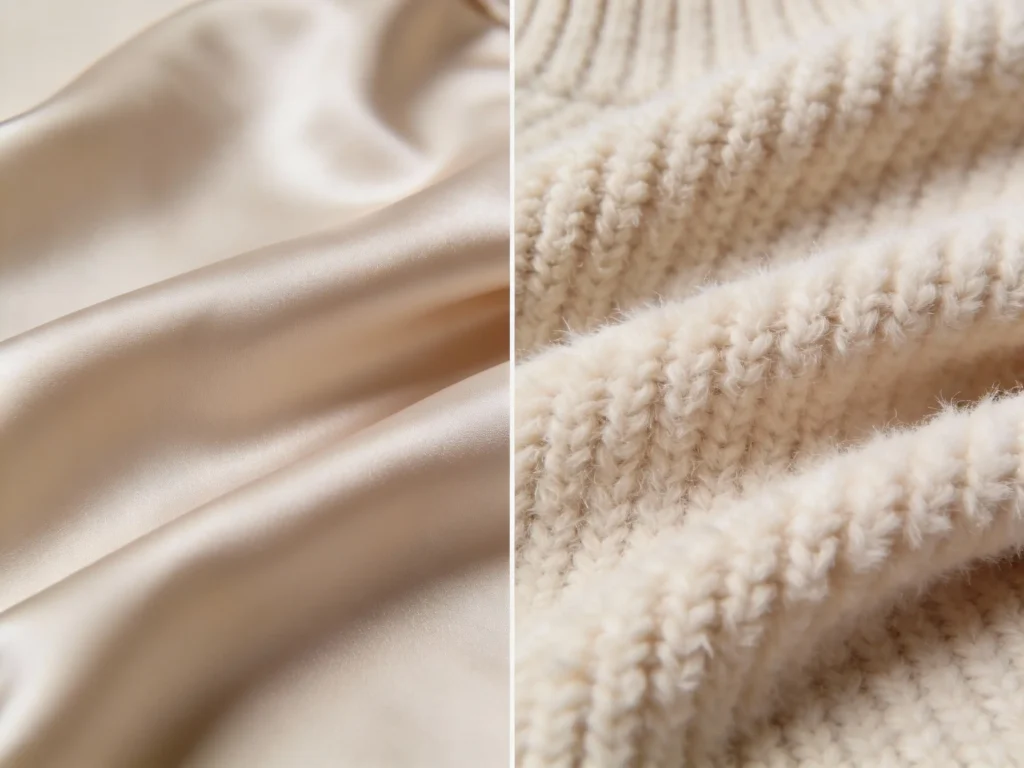
Polyester is the most widely used synthetic fabric in the world. It is incredibly durable, resistant to wrinkles, and holds its shape well.
Because it is hydrophobic, it dries very quickly, making it the top choice for activewear and outdoor gear.
However, keep in mind that lower-quality polyester can feel clammy against the skin, which is why fabric quality matters when buying clothes.
Acrylic: The Wool Imitator
If Polyester is the workhorse, Acrylic is the cozy alternative. It was designed to mimic the warmth and softness of wool but at a fraction of the price and weight.
However, acrylic is prone to pilling (those little fuzzballs) and static electricity more than other fabrics. This makes acrylic less ideal for people sensitive to static shocks in dry climates.
Comparison: Polyester vs. Acrylic
| Feature | Polyester | Acrylic |
| Primary Use | Activewear, pants, durable shirts | Sweaters, blankets, winter hats |
| Texture/Feel | Smooth, slick, or crisp | Soft, wool-like, fuzzy |
| Breathability | Low (but moisture-wicking versions exist) | Low (traps heat effectively) |
| Durability | Extremely High | Moderate (prone to pilling) |
| Water Resistance | High (Hydrophobic) | High (Hydrophobic) |
| Comfort Level | Can feel synthetic/clammy if cheap | Soft on skin, warm, less scratchy than wool |
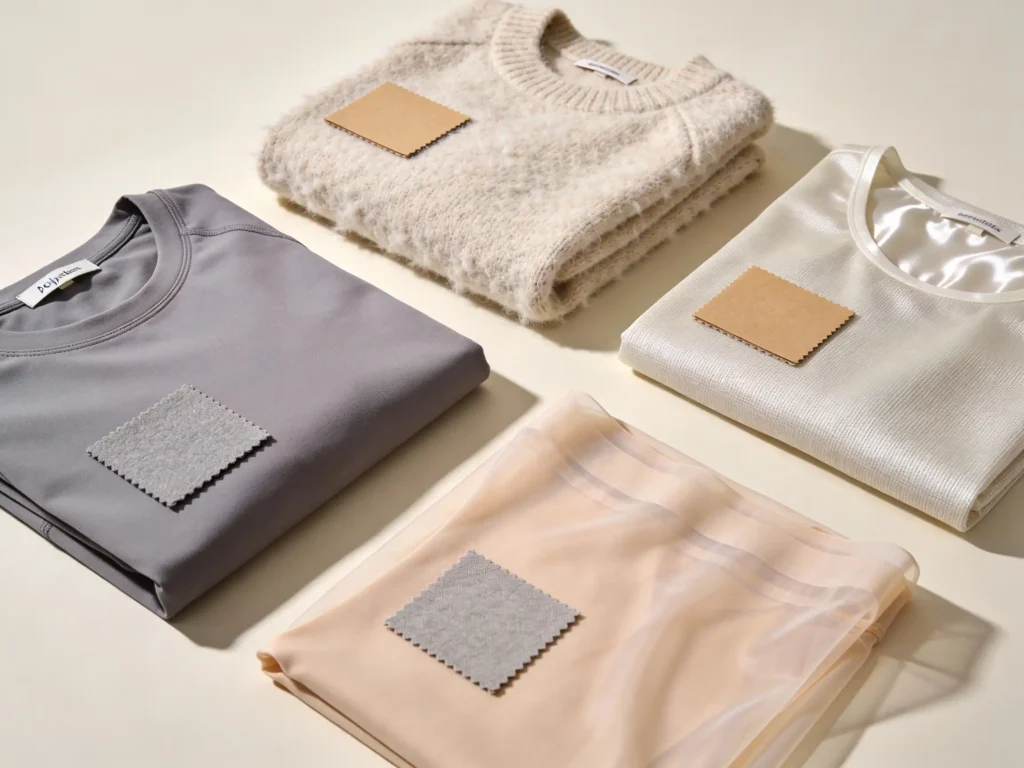
Other Common Synthetic Fibers
Nylon
Nylon was the first completely synthetic fiber. It is famously strong and elastic. You will often find it in hosiery (nylons), swimwear, and durable outerwear like windbreakers.
Spandex / Elastane
Known for its incredible stretch, Spandex is rarely used alone. It is almost always blended with other fabrics (like cotton or polyester) to add stretch and comfort to jeans, leggings, and underwear.
Rayon / Viscose (The “Semi-Synthetic”)
It is important to clarify that Rayon is considered semi-synthetic.
Why? Because it starts from natural cellulose (wood pulp) but undergoes heavy chemical processing to become a fabric. It bridges the gap between natural and synthetic, offering a silk-like feel with some breathability issues.
Pros and Cons of Wearing Synthetics
Before buying your next garment, consider these advantages and disadvantages.
The Pros
- Durable: Synthetic fibers are plastic-based, making them incredibly resistant to wear and tear.
- Quick-Drying: Because they don’t absorb water deep into the fiber, they dry fast. (Want to enhance this feature? Learn how to make clothes waterproof effectively.)
- Colorfastness: They hold dye very well and resist fading in the wash.
- Affordable: Generally cheaper to produce and buy than natural silk or wool.
The Cons
- Lower Breathability: Compared to natural fibers like cotton or linen, synthetics trap heat and sweat against the skin.
- Odor Retention: Bacteria love the smooth surface of synthetic fibers, which can lead to lingering smells in gym clothes.
- Environmental Impact: One environmental concern is that washing synthetics can release microfibers (tiny plastic particles) into water systems.
How to Care for Synthetic Fabrics
Synthetics are low-maintenance, but they have one major weakness: Heat Sensitivity. Many synthetic fabrics are thermoplastic, meaning they can melt when exposed to high temperatures.
Safety Note: Many synthetic fabrics melt before they burn, so high heat is dangerous.
Washing
- Use cool or warm water. Hot water can break down the fibers over time.
- Use a gentle cycle to reduce agitation, which causes microfibers to shed.
Drying & Ironing
- Air drying is best. Since they are moisture-wicking, they dry quickly on their own.
- If you must use a dryer, choose the lowest heat setting.
- Ironing: Be very careful. Use a low setting or a pressing cloth. A hot iron can instantly melt polyester or acrylic, leaving a shiny mark or a hole.
Dealing with Static & Pilling
- Static: Use a fabric softener or dryer sheet to reduce static electricity, especially in winter.
- Pilling: For acrylic sweaters, use a fabric shaver to gently remove fuzzballs and keep the garment looking new.
Conclusion
Synthetic fabrics have changed the way we dress and decorate our homes. Whether it is the rugged durability of polyester or the cozy warmth of acrylic, these materials offer performance that natural fibers often can’t match.
However, knowing their limits—especially regarding heat and breathability—helps you make smarter choices.
For gym wear and rainy days, synthetics are perfect. For a hot summer day, you might still want to stick to cotton.
Frequently Asked Questions (FAQs)
Is polyester better than cotton?
It depends on the purpose. Polyester is better for durability and sweat-wicking (activewear), while cotton is better for breathability and comfort (casual wear).
Does acrylic fabric shrink?
Acrylic is generally resistant to shrinking, but high heat in the dryer can distort its shape permanently. Always wash in cool water.
Are synthetic fabrics safe for skin?
Yes, for most people. However, those with very sensitive skin or eczema might find that the lack of breathability causes irritation or itching.